
The lonely road to mystery deaths
The scenic trail meanders through mature woodlands, past landmarks, and along hillsides awash with wild flowers. The Deepdene Trail, a forest and park near Dorking in Surrey, is normally a place for quiet contemplation.
But for one Easter weekend dog walker on 17 April 1990, this picturesque scene ended suddenly with a grim discovery.
Recent gales had brought down trees, with dramatic scenes of enormous ancient roots upended.
Near a footpath, the storm had also revealed the partial skeletal remains of a man.
He was dressed in a brown jacket, beige jumper, distinctive yellow and black herringbone trousers and brown leather lace-up shoes.
In spite of some strong clues and extensive investigations, the man, aged between 55 and 70, has never been identified.
His cause of death remains unknown after 36 years.
An inquest returned an open verdict, the circumstances of his death unclear given the length of time the remains had been undiscovered.
Evidence does suggest he died sometime after 1975, and intriguingly, he appeared to have had links to nearby Netherne Hospital, formerly the Surrey County Asylum, which closed in 1994.
The distinctive yellow and black herringbone trousers had a handwritten clothing label stitched inside, bearing the details ‘n.hamilton lytt 25.3.75. ‘
The man’s surname could have been Hamilton, and the reference ‘lytt’ could be an abbreviation of Lyttleton, a close supervision unit at the hospital.
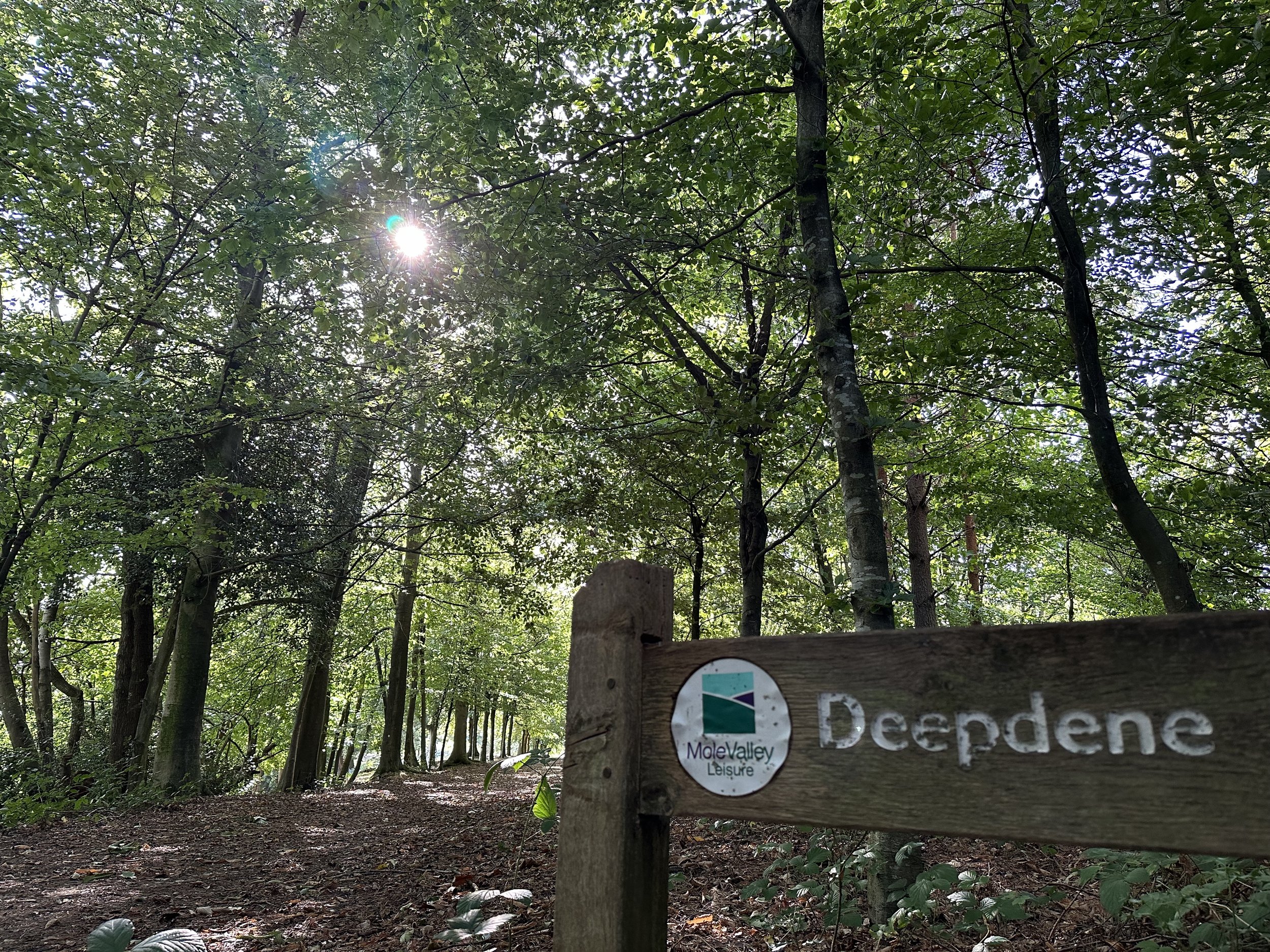
The Deepdeene Trail - near Dorking, Surrey

A copy of the writing found on a label inside his red, green, yellow and black herringbone trousers.
Sadly, the mystery of this man’s identity, his story and final journey in life is not an isolated or unique case.
A striking number of unidentified human remains are males found in scenic, countryside and coastal locations.
In 52 cold cases currently being investigated by Locate International, the UK’s only charity dedicated to locating the missing and naming the unidentified, 33% are unidentified lone males discovered in remote, scenic, or rural locations, 17 of the cases.
These men died, or chose to die, isolated from society in a number of ways.
In some cases, they left behind significant clues to their identities.
But the fact that so little is still known about who they were has sadly left them even more isolated in death.
They were not invisible on those final journeys, and these unidentified men must have encountered others in their final days, been seen by others and ultimately known or missed by others.
Although some of these deaths can be attributed to suicide or possible suicide, we do not know exactly how or why the majority died, or why they ended up being found in these locations.
Tanja Conway-Grim is a trustee of Locate International and an expert in the fields of neurodiversity awareness, mental health, autism and ADHD. She highlighted common patterns of behaviour in these lonely final journeys.
“These countryside and scenic locations, beaches, forests, rural areas, could be conscious or sub-conscious choices, possibly linked to their past lives, holidays or comfortable memories of a place, where they enjoyed better times,” she said.
“Intriguingly the choice of a ‘final destination’, whilst seeming to be isolated in a rural location, can be fairly close to a walking trail or tourist spot, in a quiet part of a forest for example, affording privacy, but surprisingly close to others.”
In the UK, adult males are three to four times more likely to suffer from autism or ADHD conditions, according to Autistica a UK-based autism research and campaigning charity.
Autism conditions impact one to two percent of the population, and ADHD three to five percent, with children’s rates higher still
Yet research shows up to 66% of autistic adults had thought about suicide during their lifetime, and up to 35% had planned or attempted suicide.
In adults diagnosed with ADHD, up to 41% have considered or attempted suicide.
This Mental Health Awareness Week 2026, between 11th – 17th May, Locate International is exploring those links to raise public awareness.
Among the cold cases with common threads being highlighted by Locate International are:
Wark Forest Man, an unidentified male discovered by a forestry worker in Wark Forest, Northumberland on 2nd February, 1990.
The forest is part of Northumberland National Park, covering 10,000 hectares of woodland, waterfalls and stunning scenery, popular with tourists and hikers. He is believed to have been between 20 and 40 years old, approximately 5’6” in height.
A local hotel booking linked him to an American accented tourist, Christopher Oliver, but extensive research and national appeals have failed to confirm a match.

Artist Impression of Wark Forest Man by Hew Morrison
Forest of Dean Man, an unidentified male found by walkers in the Forest of Dean, Gloucestershire, on 16th September 1984.
The forest is located in Gloucestershire between the Severn and Wye rivers, an ancient woodland and one of England’s first National Forest Parks. It is a premier destination for outdoor activities, offering extensive walking trails, cycling paths, and unique sites like the Sculpture Trail, attracting millions of visitors annually. Possessions found with the remains suggest he was a hiker or rambler, between 25 and 60 years of age, and carrying no form of ID.
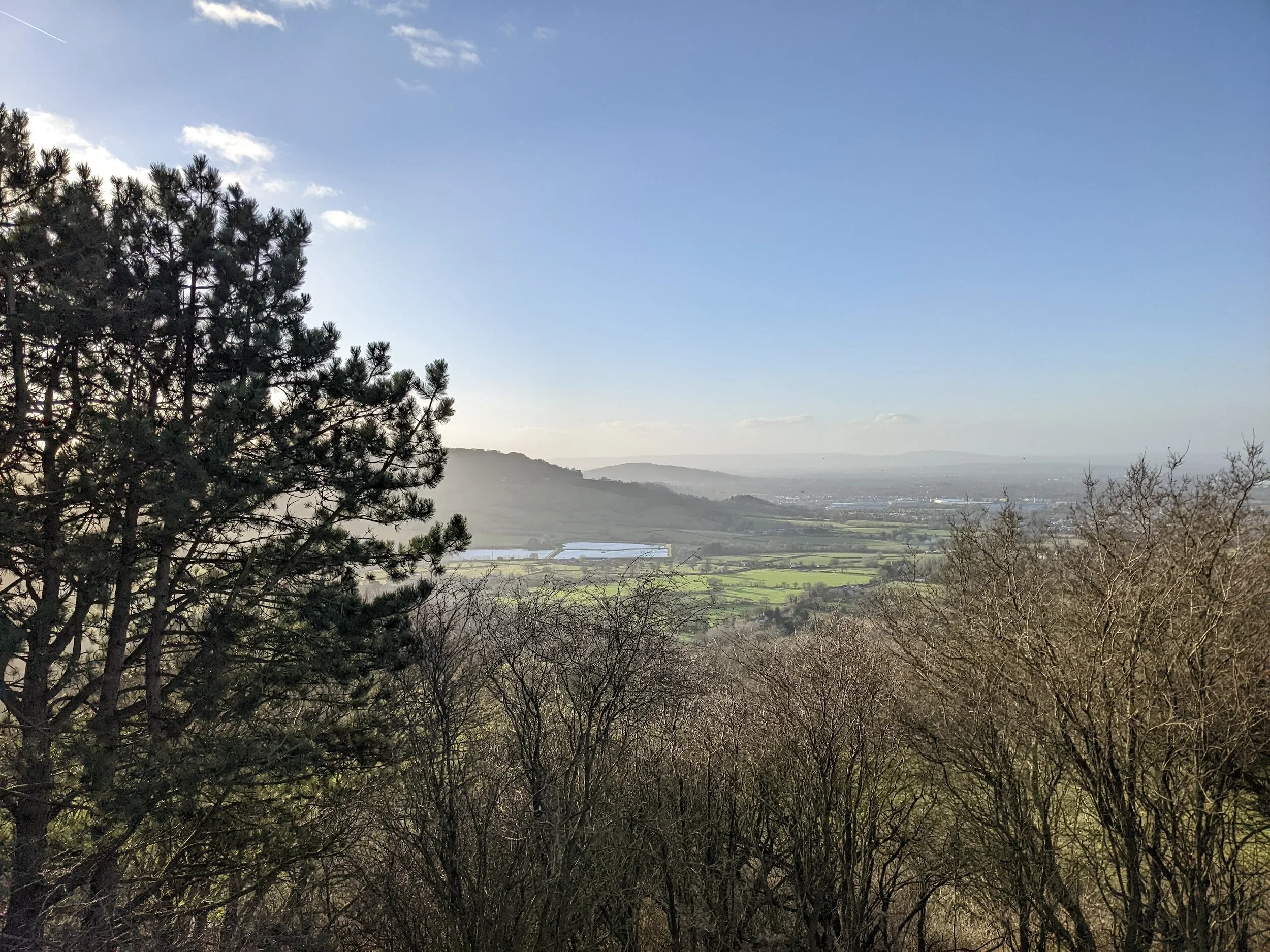
Forest of Dean
Hampshire Barn Man, discovered in a remote barn near Micheldever in Hampshire on 1st December 2017.
Cleveland Man, found on 30th August 1981, a suicide on the edge of a bird sanctuary and nature reserve.
Epping Forest Man, discovered on 25th September 1982 in the Jack’s Hill area of Epping Forest, a massive, 6,000-acre ancient woodland popular with tourists, with 55,000 ancient trees, lakes, Iron Age sites, Queen Elizabeth's Hunting Lodge, diverse hiking trails, and extensive, free, open-access natural spaces.
Sligo Man, found in mysterious circumstances on a popular tourist beach in Sligo, Ireland on 16th June 1990. Possibly from Austria, he had been staying in a local hotel under an assumed name. In spite of widespread appeals, international police inquiries and investigations by Locate, his identity still remains a mystery after 36 years.
Male suicide rates in the UK are shockingly higher than female rates, with men accounting for roughly 75% of adults taking their own lives, according to the UK’s Office for National Statistics.
Andy’s Man Club, a leading UK charity dedicated to preventing male suicides and supporting families, is also supporting Locate International’s campaign during Mental Health Awareness Week 2026.
Their mission is to encourage isolated men to speak openly about their issues.
Sasha Massam at Andy’s Man Club said: “We know how important it is to check in with the men in our lives. If you suspect someone may be struggling, start with a simple conversation, ask how they’re really doing and listen without judgment.
“Creating a supportive environment is key, even small gestures of care and understanding can make a real difference.“
Andy’s Man Club runs peer-to-peer support groups for men over 18 going through storms in their lives, every Monday at 7pm (excluding bank holidays). Groups are free to attend with no registration required. You can find your nearest group at www.andysmanclub.co.uk or email info@andysmanclub.co.uk.
Now two MPs with unidentified cases in their constituencies are also supporting our awareness campaign.
Matt Bishop, MP for Forest of Dean, whose constituency includes one of these cold cases has given his support to the campaign.
“ I am pleased to support the work of Locate International, whose dedication to resolving long-term missing person cases brings vital attention to individuals and families who have waited far too long for answers.
The cases highlighted through their countryside campaign, including Forest of Dean Man, are a powerful reminder of the human stories behind these investigations. In particular, the issue of unidentified and missing men in rural areas raises important questions about isolation, vulnerability, and how we support those who may be at risk.”
Dave Grimstead, the co-founder of Locate International, a former senior UK police office and author of Someone Must Know , the story of Locate International to be released by Penguin on 11th June, added:
“Every ninety seconds, someone is reported missing in the UK. Most return, but some do not.“
“Based on our research, there are indications that a percentage of long-term missing may be those people who have died by suicide or accident/exposure after going missing, and their bodies have not been discovered, or remain unidentified.”
“When someone goes missing, the initial response is fast – but once the chance of rescue fades, searches often wind down. Families are left without answers. Communities, without closure. We do not know how many of the unidentified people found in rural areas have been reported missing or have lost contact with family or friends.”