
More than 40 years after Barnes Bridge Man was found on the north shore of Barnes Bridge in south-west London, we still do not know his name.
A living depiction by forensic artist Hew Morrison has been created for our recent appeal which offers an important new way of seeing him: not as an unidentified man in a case file, but as the person somebody may have once known.
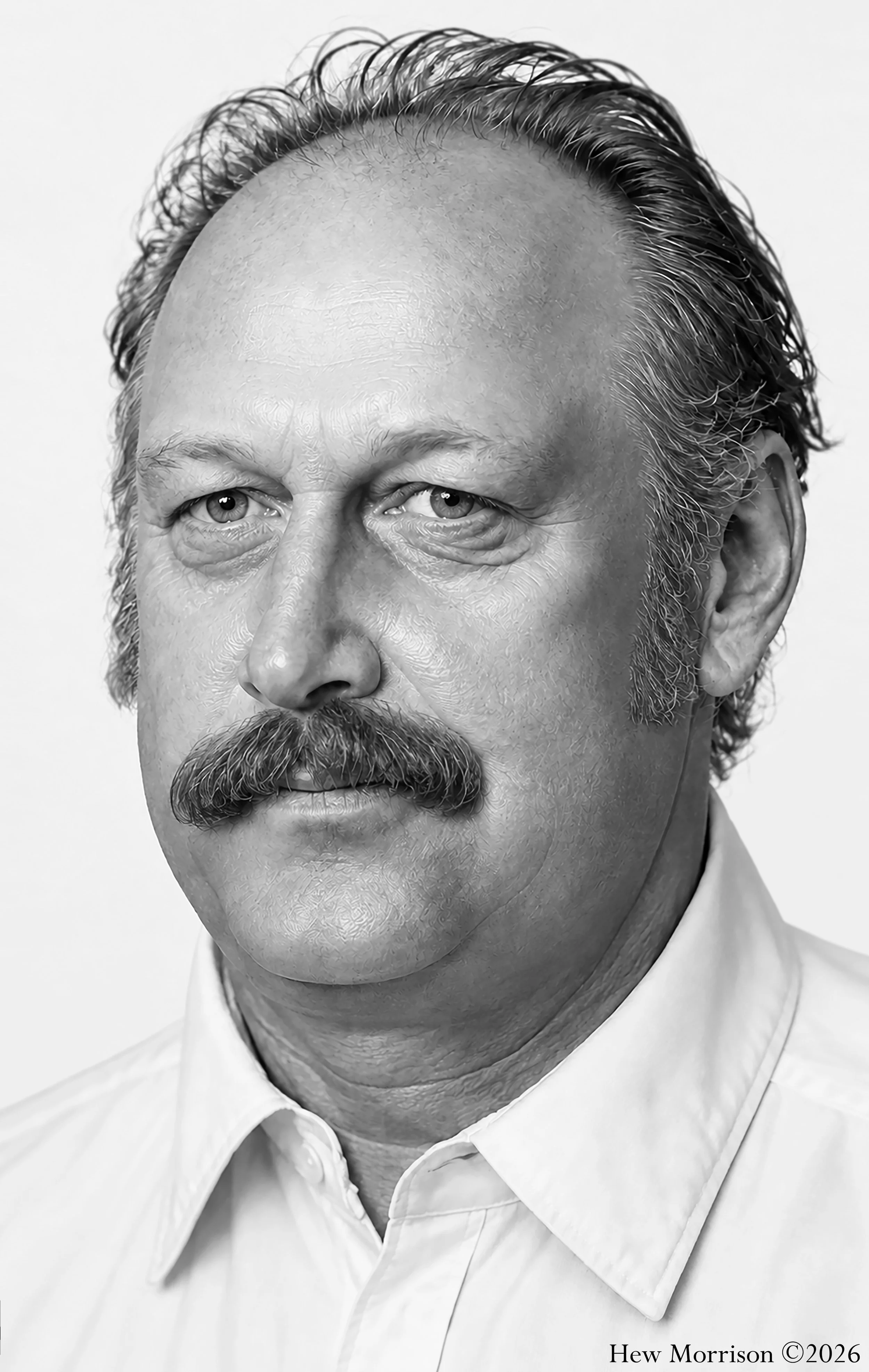
Image: Living depiction of Barnes Bridge Man by Hew Morrison ©2026.
The image Hew has created is exceptionally lifelike. Its photographic realism makes the familiar features of Barnes Bridge Man - his receding hairline, moustache, sideburns and distinctive face - feel more realistic and recognisable. It is strikingly different from the more traditional artist’s impressions people may expect to see, while remaining true to the original evidence from over 40 years ago that we luckily have available.
Remaining true is important, even slight ambiguity in such detailed work can be harmful when seeking an identification.
An artist's impression is incredibly helpful when launching an appeal as we hope someone may recognise a face, important when we don't have a name. It can also spark a memory of a place or a detail from the past in someone who may have worked with him, lived near him, shared a drink with him, or seen him at a church, club or workplace in London during the late 1970s or early 1980s.
Hew created the depiction from a historical mortuary photograph. His work required careful consideration of the limitations of that source material and the changes that occur after death.
“During the process of creating the living depiction of this man, I had to take into consideration post-mortem changes to his facial appearance, the angle that he had been photographed at, poor lighting and the overall quality and resolution of the image-which had been photographed with a grainy, black and white camera film.”
“Post-mortem changes to the face that happen after death such as swelling, patches of discolouration and a slackness of the jaw were removed so as to give a more natural appearance.”
Hew also considered the detail that could still be observed in the original image:
“However, despite the low quality of the mortuary image, fine details could still be observed. His hair, sideburns and moustache, the shape of his lips, left ear, the tip of his nose and shape of his nostrils were still distinguishable.”
The new image remains in black and white. While contemporary records described Barnes Bridge Man as having a ginger tint to his hair and blue eyes, the source photograph could not confirm the exact colours or tones. Hew explains:
“In a case like this, if not in all such cases, it is more appropriate to depict a face in black and white so as to add a degree of ambiguity and to not be too suggestive with these particular details. Also to be considered is the fact that the skin tone will have altered post-mortem.”
The result is not a photograph and cannot tell us everything about how Barnes Bridge Man looked in life. It is a careful forensic interpretation, designed to make the best possible use of the evidence while avoiding assumptions that cannot be supported.
Hew’s work has previously been featured by BBC News, reflecting the important role forensic artists can play in helping to restore recognition and dignity to people who have died without a name.
We do know that Barnes Bridge Man may have had Irish heritage or connections to London’s Irish community. He may have lived or worked in Hounslow, Richmond, Hammersmith, Putney, Fulham or elsewhere in south-west and west London. Did you frequent those areas of London over 40 years ago?
Please take a moment to look at his image. Could you have known him? Could a parent, grandparent, former colleague, neighbour or friend recognise him?
Even a small memory, a first name, a nickname, a photograph you may have or a detail that seems uncertain could help give Barnes Bridge Man his name back. No detail is too small, even if you aren't 100% sure, letting us know could point us in the right direction and give us an opportunity to investigate an angle that hasn't yet been explored.
Read the full Barnes Bridge Man appeal where you can also share information anonymously.